
Stop Giving Advice From 1994!
Why most business wisdom belongs in a museum, from someone who’s spent 32 years dishing it out

I’ve spent 33 years advising business which means I’ve also spent over three decades watching people take advice.
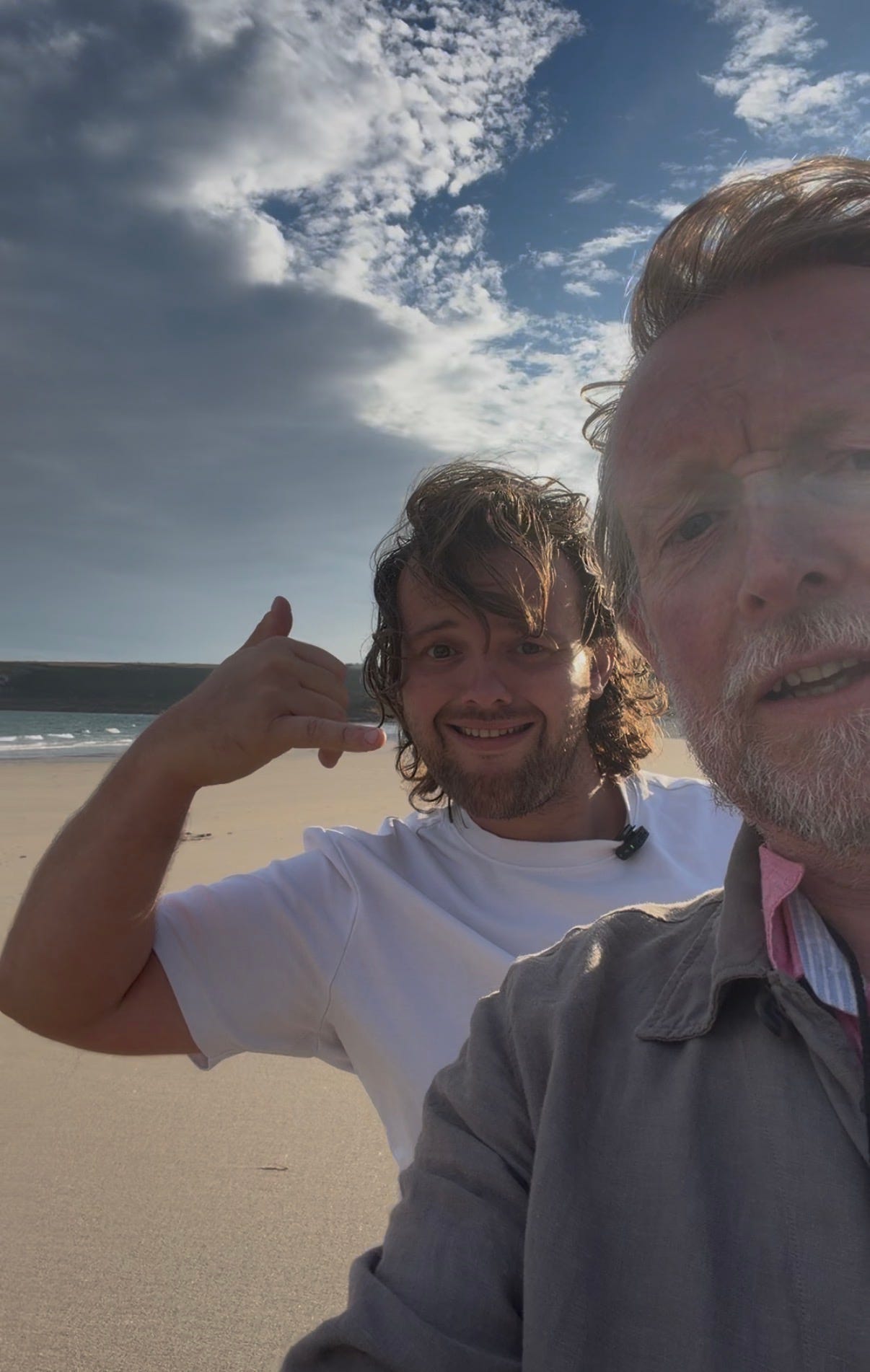
This weekend I spent some quality time with my good friend Dan Pope, 32 years old, and the genius behind The Hungry Podcast. We spent hours walking and talking, pulling apart businesses we knew and debating where the world of business is heading next.
Somewhere on that walk, an uncomfortable thought caught up with me. Dan has been alive for exactly as long as I’ve been giving advice. Thirty-two years advising business owners and their teams on how to grow personally, professionally, commercially. And a good chunk of what I’ve dished out over those decades has quietly gone obsolete while I wasn’t even looking.
That’s what prompted this article. Here’s what nobody tells you about advice. To start with, most of it has a sell-by date, and almost none of it comes with one printed on the packet.
The frameworks, the mantras, the airport-bookshop wisdom, the vast majority of it was formulated for a world of fax machines, jobs for the old boy networks, cheap oil and a climate that behaved itself. Soz everyone, but that world is gone. Some of it is extinct already. The rest is on the endangered list.
And yet we keep handing out the same advice as if it were 1994 (the year I started big fish). It’s like giving someone directions using a map of a city that’s been demolished and rebuilt three times since. The confidence with which the directions are given doesn’t make the map any more accurate.
So allow me the opportunity to be a tad provocative, because after three decades I think I might have now earned the right.
Most business advice isnt wrong because the people giving it are thick. It’s wrong because it’s answering yesterday’s exam paper.
The theory is older than the theorists admit
Most business theory is rooted in the way businesses used to be. Scientific management assumed workers were interchangeable cogs. Shareholder primacy assumed the planet was an infinite free resource and society was someone else’s problem. The five-year strategic plan assumed the world would hold still long enough for you to execute it.
None of those assumptions survives contact with reality anymore. Yet the theories built on them are still taught, still quoted, still stitched into slide decks by people charging handsomely for the privilege.(I call these people “the deck Dicks”)
So, here’s the uncomfortable truth about received wisdom…
Newsflash! it isn’t wisdom because it’s true. It’s wisdom because it’s received. It gets passed along like a family heirloom, and nobody wants to be the one who points out that Grandad’s antique clock stopped working last century.
When someone offers you a piece of business advice, the first question shouldn’t be “is this clever?” It should be “what world was this true in, and do I still live there?”
Doing the right thing is about to become the biggest business on Earth
Now for the part that will annoy the wanker bankers.
Utilitarianism, ie being genuinely useful for the greater good, is more important now than at any point in human history. And I believe it’s about to become the most commercially valuable position a business can occupy, despite the best efforts of a certain breed of financier to suppress “doing the right thing” as a legitimate business category. To them, purpose is a marketing garnish. A bit of parsley on the profit. Well my wanker banker friends, I’m afraid those days are over. Sorry
They have it exactly backwards.
The global economy is about to wake up to something so obvious it’s almost embarrassing to write down.
Because without a healthy, sustainable planet there is no economy. Because without a planet we can inhabit there is no human race. No consumers, no supply chains, no quarterly earnings calls. The market cap of everything, everywhere, rounds to zero on a dead planet.
You’d think that would be priced in. It isn’t. Which tells you everything you need to know about how backward looking the advice industry really is.
But here’s the twist the cynics miss… this isn’t a sermon, it’s a forecast. Transforming the world into a sustainable place to live is going to become massive business. In fact, plausibly the biggest commercial opportunity since industrialisation itself.
Rewiring energy. Regenerating soil. Redesigning food, transport, housing, materials. Every one of those is a multi-trillion-pound market wearing a hair shirt.
And it won’t take many more months of relentless extreme weather, famine and wildfires before people stop debating and start crying out for help. There will come a moment, sooner than most boardrooms think, when humanity collectively admits it was wrong about climate change. And here’s the thing. At that point, whether the warming was human made or not becomes a pub argument, not a strategy.
Cooling the planet and sustaining a living from the soils of the world will simply be the most important work available to anyone. The businesses already positioned to do that work won’t need a marketing department. Demand will kick the door down and grab it with both hands
The old advice says maximise shareholder value, treat sustainability as a cost centre, do the minimum the regulator requires.
The new reality says that usefulness to the greater good IS the value. The businesses that solve real problems for a species in trouble will make the last century’s oil fortunes look like a market stall.
Doing the right thing is about to stop being a category the bankers can sneer at. It’s about to become the category that eats all the others.
So, with that in mind, what do we tell our kids to do now?
“Follow your passion” is the worst careers advice ever printed on a mug
Let’s look at careers advice for a moment, because it’s where the 1994 thinking does its most visible damage.
“Follow your passion.” You’ll generally find it on graduation cards, social posts and cheap motivational mugs. It sounds great, but it’s actually a trap.
Here’s what 32 years of watching real careers has taught me.
Passion doesn’t create demand. Being genuinely good at something that helps someone else does. The market doesn’t pay you for what you love. It pays you for what it needs and you can deliver.
And here’s the part that genuinely surprises people. Passion is what shows up after you’ve got good, not before. Competence and capability comes first. Then usefulness. Then, quietly, almost as a reward, passion shows up because there are few things human beings enjoy more than being excellent at something that matters to someone else. We’ve had the sequence backwards for generations.
I see this every day with founders and operators who tell me, “I want to follow my passion.” Lovely. That’s all well and good if you happen to be passionate about something that will generate cash. Most people aren’t. Most people’s passions live in their hobbies. And let’s be honest about what most hobbies are. They’re elaborate machinery designed to offset the misery of a dull day job. The fishing, the golf, the five-a-side, the vinyl collection, they’re not career signals. They’re painkillers.
Building a business on a painkiller is how you end up owning a very expensive hobby with a VAT number. Believe me, I’ve been there and got that very expensive t-shirt in the past.
The better question, the one I ask every founder who sits down opposite me, isn’t “what are you passionate about?” It’s “what are you good at that somebody else desperately needs?” Answer that, and the passion tends to sort itself out. Get good, get useful, get paid, and then watch how passionate you become.
The clever ones are selling experiences, not escaping into them
But there’s a second layer here, and it’s where the clever ones quietly get rich.
If most people’s passions are hobbies designed to make the day job bearable, then there is an enormous, growing, global market of people who will pay serious money to feel something. And the sharpest operators I know have spotted it. The industries built around providing experiences are fast becoming the most valuable and sought-after on the planet.
Think about what that means. The escape hatch has become the economy. Travel, food, wellness, sport, live events, adventure, learning, craft, anything that gives a human being a memory instead of another object.
When machines can make almost anything and software can automate almost everything, the one thing that holds its value is how you make people feel. You can’t download a memory. You can’t offshore a moment.
(I’m lucky enough to be part of Sharky & George for example. Check them out if you want to understand what I’m talking about).
So the modern move isn’t to follow your passion into your shed. It’s to build the thing that serves other people’s passions and to be the one providing the experience rather than the one buying it to numb the week. One of those is a hobby. The other is a business. The 1994 advice can’t tell the difference. You need to.
And notice how neatly this connects to the bigger picture. A sustainable world and an experience economy are natural allies. Experiences are, on the whole, lighter on the planet than stuff. The future belongs to businesses that make people feel alive without costing the Earth, literally.
So, what I’d actually tell you, thirty-two years in with the scars and injuries to show for it all
If I had to compress three decades of advising into something that won’t be embarrassing by 2030, it would be this.
Treat all advice, including mine, as perishable. Ask what world it was true in. Most of it was brewed for a world that no longer exists, and some of it, frankly, never worked in the first place. It just went unchallenged because everyone was quoting the same motivational books.
Aim yourself at usefulness. Not passion, not personal brand, not hustle-porn theatrics. Usefulness. Being genuinely good at something that genuinely helps someone else is the only career strategy that has survived every economic era I’ve worked through, and it’s the only one guaranteed to survive the next.
And point that usefulness at the biggest problems you can find, because that’s where the demand is going. A planet that needs cooling. Soil that needs regenerating. A species that needs feeding, housing, and increasingly, made to feel alive. That’s not charity. That’s the growth market of the century. What we need now aren’t more managers trained to run yesterday’s machine. We need entrepreneurs willing to build tomorrow’s.
The consultants of 1994 told you to find your niche, protect your margin and follow your passion.
I’m telling you to find your use, serve the greater good, and let the passion catch up with you.
It always does.
As I seem to have repeated many times in this article, I’ve spent 32 years advising business owners and teams on how to grow personally and professionally. The single biggest lesson? Question the advice, especially the advice everyone agrees with.
Just saying.
Brilliant Perry!! Loved reading this. Carolyn x